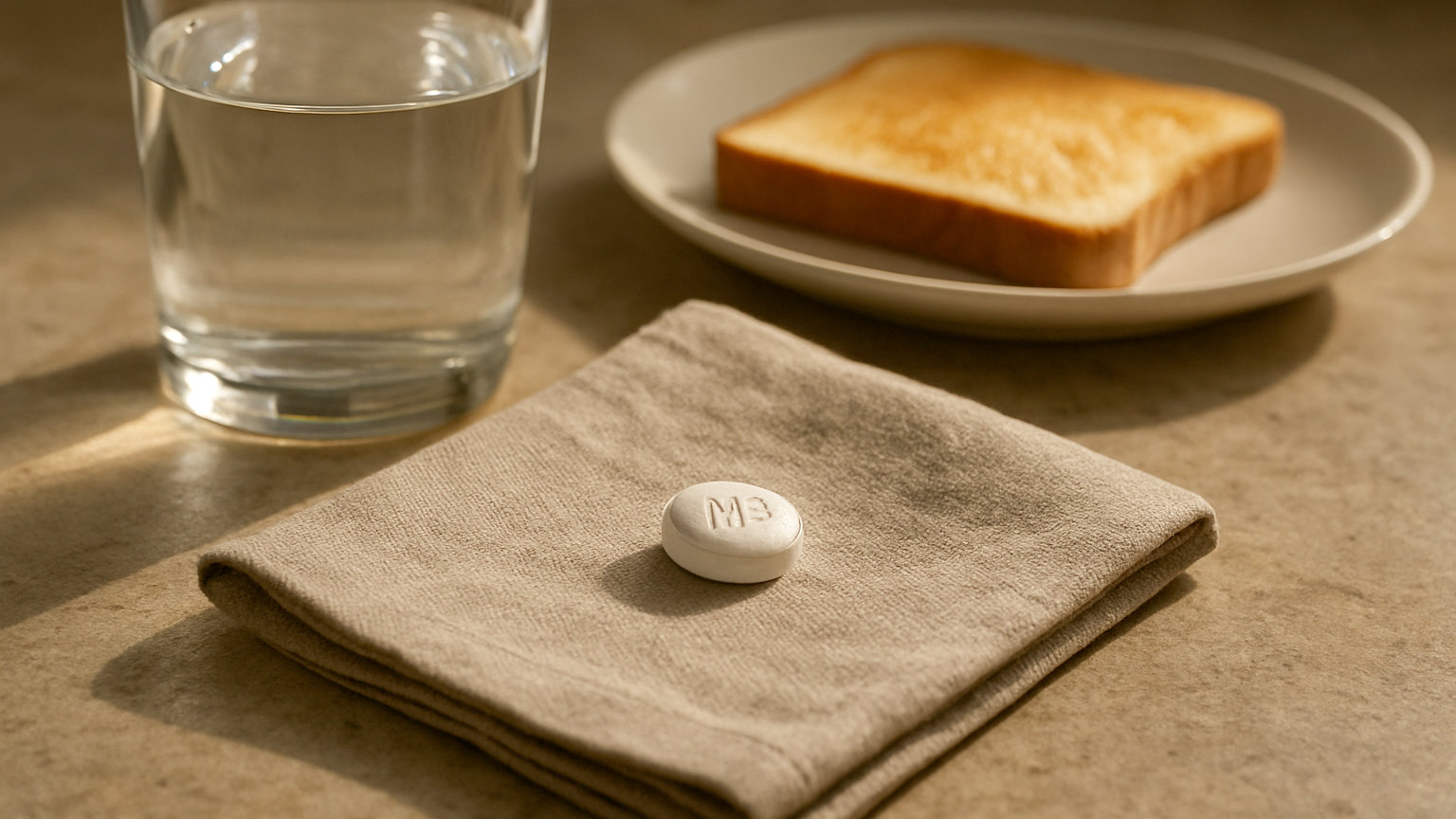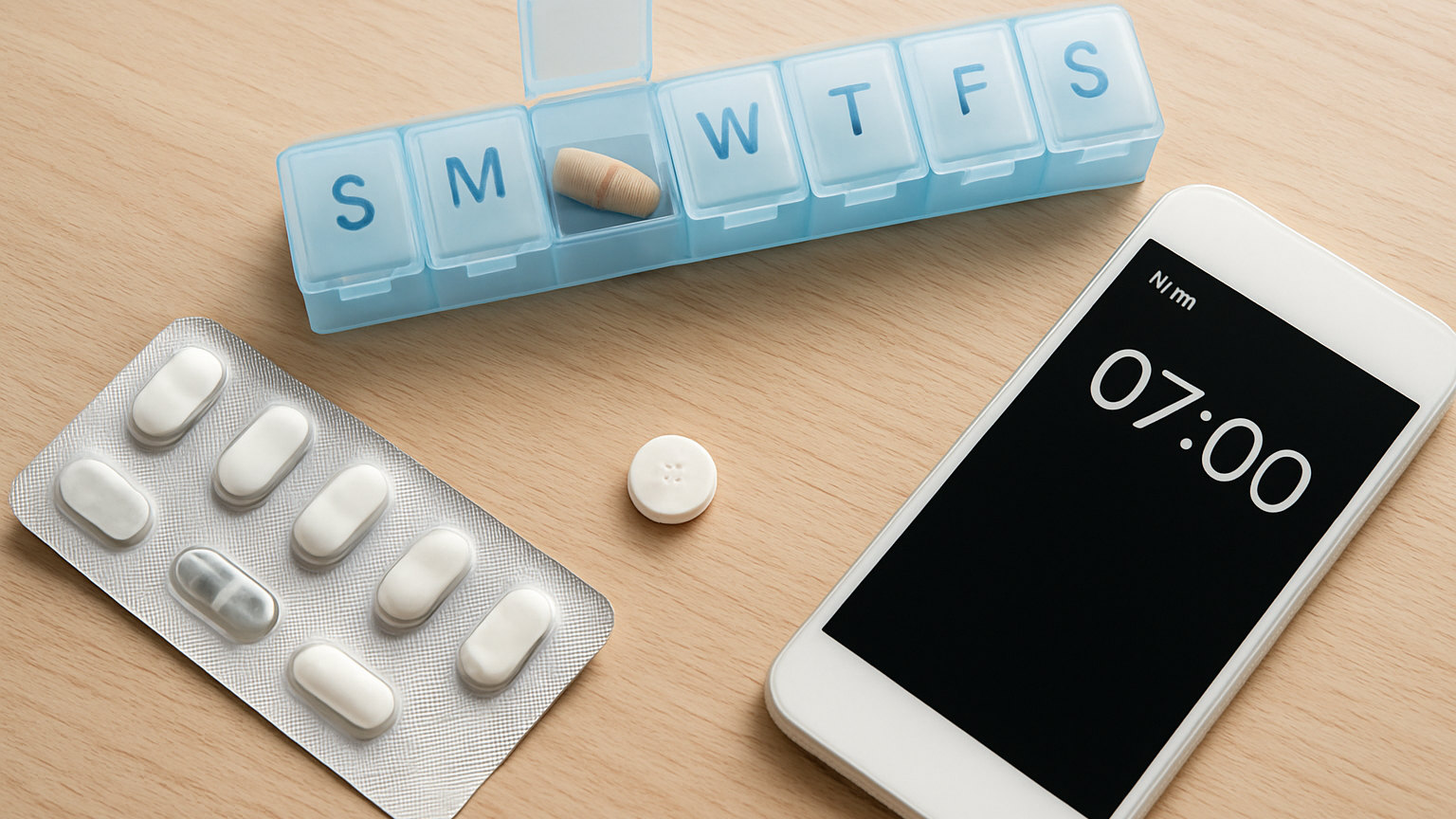
Loose tablets turn up - in a drawer, at the bottom of a bag, in a relative's house after a clear-out, in a dosette box nobody can account for. The instinct is either to look them up and take them, or to bin them. Both are wrong. Identification by appearance is far less reliable than people assume, and household waste is not where medicines should go.
Why appearance is not identification
Generic manufacturers are not required to make their tablets look like anyone else's, and pharmacies buy from whichever supplier has stock - so the same drug can appear in several colours, shapes and markings.
Conversely, quite different drugs can look near-identical.
Online tablet identifiers are largely built on American products, where the imprint coding system differs from the UK, so a confident-looking match may be wrong.
Markings help a pharmacist narrow things down, and even they will not usually confirm an identity from appearance alone for anything that matters.
See why your medicine looks different.
The rule
Do not take a medicine you cannot positively identify, and do not take one prescribed for somebody else.
The obvious risks are an interaction with what you already take, an allergy, or a dose intended for someone quite different.
The less obvious one is that unlabelled tablets are frequently out of date or degraded, having sat in a warm drawer for years.
Take them to a pharmacy instead. They will dispose of them, and may be able to tell you what they were if that matters.
Where they come from
Recognising the common sources helps prevent the situation recurring.
Decanting. Tablets moved into a pill pot or an organiser lose their label, expiry, batch number and strength. Keep them in the original packaging.
Old courses. Antibiotics not finished, painkillers from an operation, a short course that ended.
Medicines stopped and never returned, which then get taken again during a later illness.
Someone else's supply, left after a stay or inherited after a death.
Things bought abroad or online, frequently with no English labelling at all.
See clearing out your medicine cupboard.
If a child has swallowed one
Call 999 or go straight to A and E, even if the child seems completely well, and take whatever packaging or remaining tablets you have.
Do not wait for symptoms. Several medicines produce none at first and cause serious harm afterwards - paracetamol, iron, some heart medicines and some diabetes medicines among them.
Do not try to make the child vomit.
Take the container even if it is not the one the tablet came from, since it narrows the possibilities.
See keeping medicines away from children.
If an adult has taken one
Ring 111 for advice, or 999 if the person is unwell, drowsy, confused or having difficulty breathing.
Bring the tablets and any packaging with you.
If there is any possibility the tablets were an opioid and the person is drowsy with slow or noisy breathing, call 999, put them in the recovery position and stay with them.
See naloxone.
Clearing a relative's home
This is the commonest situation in which large quantities of unidentified medicine appear.
Gather everything from every room - cupboards, bedside tables, handbags, coat pockets, the car, the fridge.
Return it all to a pharmacy, in whatever containers it is in. Do not sort it, decant it or empty anything.
After a death it is worth waiting a short period before disposing of medicines, in case a coroner needs to see them.
Controlled drugs need returning rather than keeping - unused opioids in a household are a recognised risk to children, visitors and anyone struggling.
Do not pass them on
Offering leftover antibiotics or painkillers to a friend or family member is common and well-meant, and it is genuinely unsafe - allergies, interactions, pregnancy and dose all differ.
Leftover antibiotics should not exist, and taking a part-course later drives resistance.
Medicines cannot be donated to charity or sent abroad either, for reasons of storage verification.
See finishing a course and what happens to medicines you return.
Tablets found outside the home
Loose tablets are also found in public places, in a bag bought secondhand, or in a property being cleared.
The same rule applies with more force, since the origin is entirely unknown. Take them to a pharmacy rather than binning them, and if children may have had access, treat that as the priority rather than the disposal question.
Preventing it
Keep medicines in original packaging. Write opening dates on anything with a short in-use life. Return things you have stopped taking promptly rather than letting them accumulate.
And order only what you need - surplus in the house is the underlying condition for all of this.
If this was useful, Recycling Medicine Packaging is worth reading next, and Usage collects the rest.