Disposal advice usually pictures a box of tablets, and tablets are the easy case. Patches, creams, gels, liquids, inhalers and devices each carry their own problem - residual drug that can poison a child or a pet, active ingredient that transfers by touch, or propellant and pharmaceutical waste that should not enter the water system. The general rule is the same for all of them, and a few specifics matter.
The general rule
Return unwanted medicines to any pharmacy. They accept them without appointment, without charge and without questions, including controlled drugs, part-used items and liquids.
Never flush medicines down the toilet or pour them down the sink. Sewage treatment does not remove most drug compounds, and measurable concentrations now appear in rivers.
Never put them in the household bin, where they can be reached by children, animals or scavengers.
See disposing of leftover medicines and medicines and the environment.
Patches
This is where the risk is highest, because a used patch looks finished and is not.
A patch is designed to deliver drug over days, and it stops being worn while it still contains a substantial reservoir. Fentanyl and buprenorphine patches retain enough to kill a child or a dog.
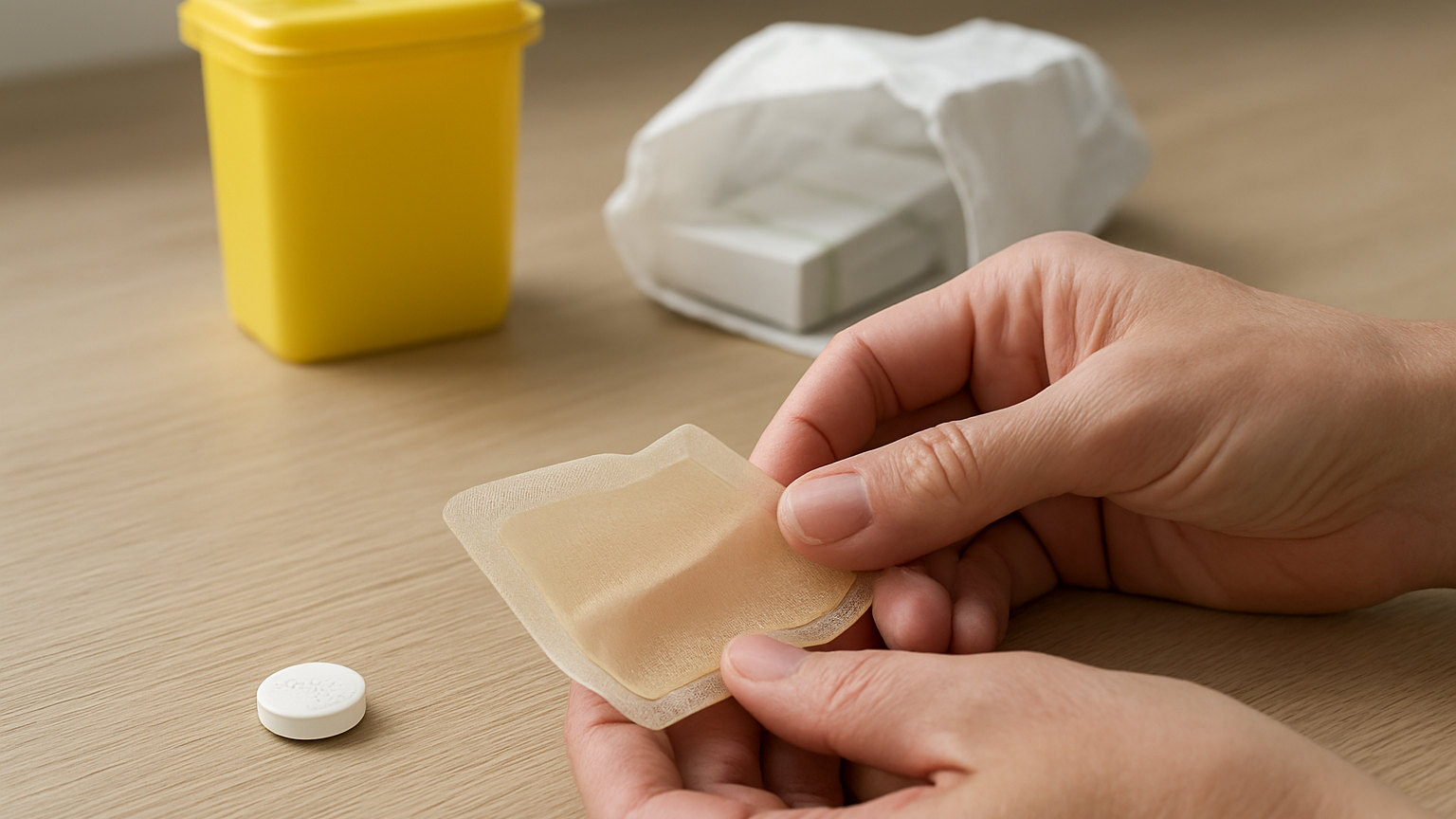
Fold the used patch sticky sides together so the adhesive surface is sealed against itself, then return it to a pharmacy or dispose of it as instructed.
Never leave one loose in a bin, a pocket or a bedside drawer.
Check daily that your patch is still in place. Patches that fall off in bed and stick to someone else have caused deaths, including in children sharing a bed.
Remove the old patch before applying a new one, and keep a written record of changes - wearing two is a recognised cause of overdose.
See fentanyl patches and how to use and rotate patches.
Creams, gels and ointments
Two separate problems.
Transfer. Hormone gels and sprays - oestrogen and testosterone - transfer readily from skin to skin and have caused hormonal effects in children and pets. Wash your hands after applying, cover treated areas where practical, and avoid skin contact until dry.
Residue in the tube. A nearly empty tube still contains active drug. 5-fluorouracil cream is extremely toxic to dogs and cats, and chewed tubes have been fatal.
Return part-used tubes to a pharmacy rather than binning them, and keep them out of reach in the meantime.
See medicines and pets and fluorouracil cream.
Liquids
The instinct is to pour them away, and that is exactly what should not happen.
Return the bottle with its contents to a pharmacy. Do not decant, dilute or rinse it out.
This matters particularly for methadone and other controlled drug liquids, which are a leading cause of fatal poisoning in young children - the liquid looks like a soft drink and is sweet.
Store them in a locked box while in use, and return unused supply promptly.
See methadone and keeping medicines away from children.
Inhalers
Return all inhalers to a pharmacy, including apparently empty ones.
Pressurised inhalers retain propellant after the drug has run out, and those propellants are potent greenhouse gases. Pharmacy schemes dispose of them properly; a household bin sends them to landfill where they vent.
Do not puncture or burn them.
See using your inhaler properly.
Needles, pens and devices
Needles, pen needles, lancets and pre-filled injector devices go in a sharps bin - never household waste or recycling, and never a plastic bottle.
Bins come from your GP, clinic or pharmacy, and collection arrangements vary by council.
Insulin and biologic pens with residual medicine should go in the sharps bin or back to the pharmacy, not the bin.
See needles and sharps disposal.
Eye drops and nasal sprays
These expire on a separate clock once opened - commonly four weeks - because sterility rather than potency is the issue.
Write the opening date on the bottle, and discard at the end of the period even if it is still full.
Return them to the pharmacy rather than binning.
Cytotoxic and hormonal medicines
Chemotherapy tablets, methotrexate, hormone treatments and some antivirals need handling with more care.
Do not crush them, avoid handling them with bare hands where advised, and return unused supply to the pharmacy or the clinic that issued it.
Ask the issuing team, since some have specific arrangements.
Packaging
Cardboard cartons and paper leaflets recycle normally.
Blister strips generally cannot in household collections, though some pharmacies run schemes. Empty plastic bottles vary by council.
Remove or obscure the label before recycling a carton - it carries your name and address.
After a death
Medicines belonging to someone who has died should be returned to a pharmacy, and it is worth waiting a short period before doing so in case a coroner needs them.
See also What Happens to Medicines You Return, and the Usage section for more on taking medicines day to day.