A single pharmacy bag produces three or four different kinds of waste, and only one of them goes in the household recycling without thought. Blister strips, inhalers and anything containing residual medicine each need handling differently, and the dispensing label carries your name, address and what you take - which is worth a moment's attention before the carton goes in the bin.
The label first
The pharmacy label on the box carries your full name, your address, the medicine and the directions.
That is more personal information than most people would knowingly put in a kerbside box, and it tells anyone who looks what conditions you are treated for.
Remove or obliterate the label before recycling the carton - peel it off and shred or tear it, or score through it thoroughly.
The same applies to repeat slips, delivery notes from online pharmacies, and the printed sheets that come with homecare deliveries.
See your data and online pharmacy services.
Cartons and leaflets
The outer cardboard carton and the paper patient information leaflet recycle normally with paper and card in almost all areas.
Flatten the carton. Keep the leaflet if the medicine is still in use - it is wanted at two in the morning far more often than people expect, and leaflets for all UK medicines are also available online.
See reading the patient information leaflet.
Blister strips
The awkward one.
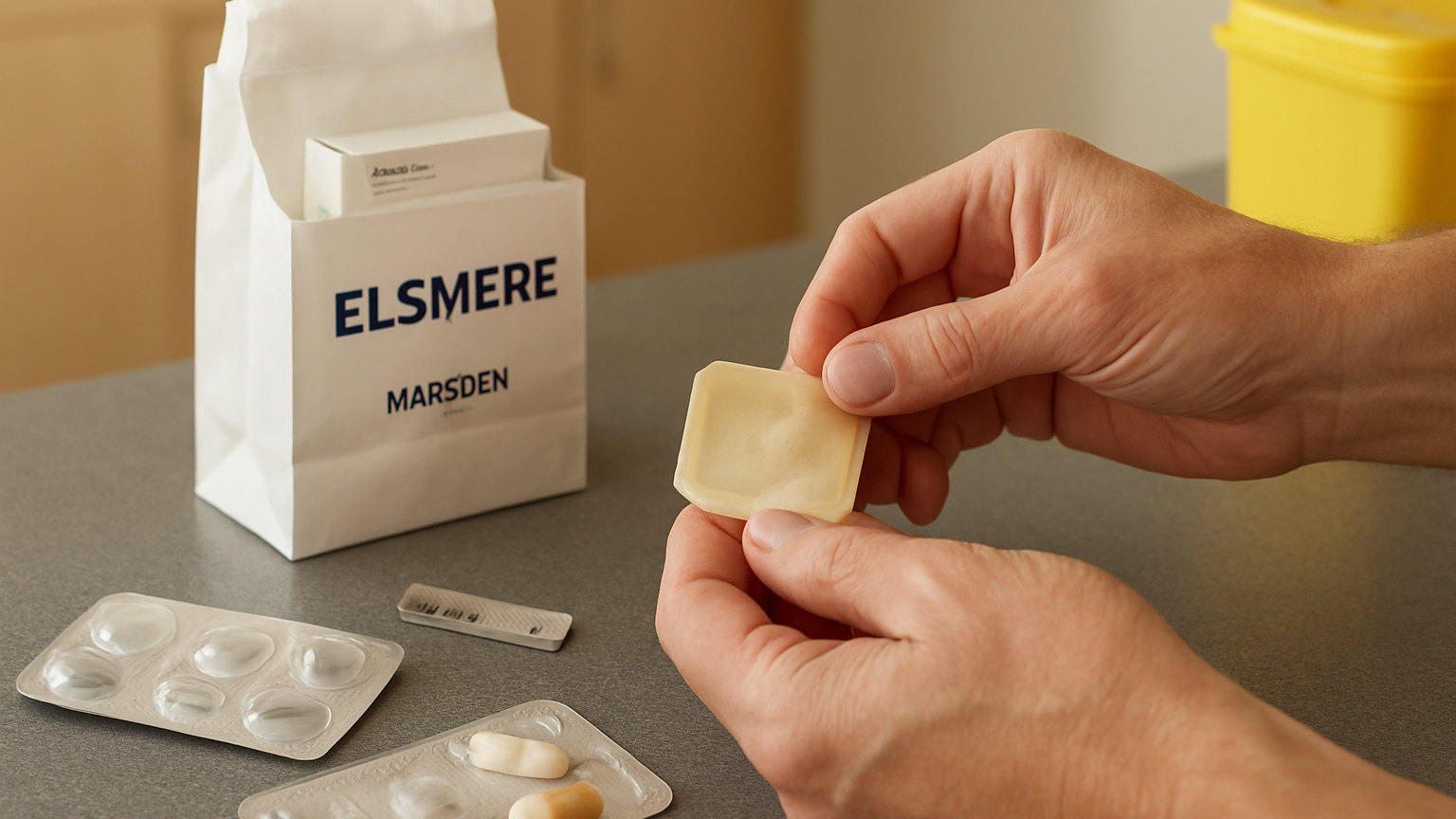
A blister strip is a laminate of plastic and aluminium foil bonded together, and separating the two is not something kerbside sorting can do - which is why they are generally not accepted in household recycling.
Some pharmacy chains and some local authorities run specific blister pack collection schemes, and these come and go. It is worth checking what is currently available near you rather than assuming either way.
Where no scheme exists, empty strips go in general waste.
Make sure they are genuinely empty first. A strip with one tablet left in it is not packaging - it is medicine, and it goes back to a pharmacy.
Inhalers go back to the pharmacy
This one matters more than any other item here.
Return all inhalers to a pharmacy, including ones that feel empty. Pressurised inhalers retain propellant after the drug has run out, and those propellants are potent greenhouse gases that vent if the device goes to landfill.
Pharmacy schemes dispose of them properly.
Do not puncture, crush or burn an inhaler, and do not put it in kerbside recycling where it will be treated as scrap metal.
See medicines and the environment.
Anything with medicine left in it
Bottles with liquid, tubes with cream, part-used blister strips, patches, pens and inhalers all go back to a pharmacy rather than into any bin.
Do not empty, rinse or decant anything to make the container recyclable. Pouring a liquid medicine down the sink puts pharmaceuticals into the water system, and rinsing a cream tube does the same on a smaller scale.
Return them as they are, in whatever container they are in.
See disposing of patches, creams and liquids.
Genuinely empty containers
Once a bottle or tub is completely empty, the rules are the ordinary plastics rules, which vary by council.
Amber tablet bottles, plastic tubs and the outer canisters of some products are accepted in some areas and not others - check your local list rather than wish-cycling, since the wrong item in the box causes problems downstream.
Remove the label first.
Glass bottles recycle with glass. Metal tubes are usually accepted with metals if fully empty.
Never in the recycling
Sharps. Needles, pen needles and lancets go in a sharps bin - never household waste or recycling, and never a plastic drinks bottle. They injure sorting staff.
Used patches, which still contain a substantial amount of drug.
Any container holding medicine.
See needles and sharps disposal.
The bigger saving
Packaging is the small end of the problem.
Enormous quantities of dispensed medicine are never taken, and once dispensed it cannot be reused - so the waste is the medicine rather than the box.
Ordering only what you need, telling the practice what you have stopped, and not stockpiling all do more than any amount of careful sorting.
See ordering repeats and what happens to medicines you return.
In short
Label off and destroyed. Carton and leaflet to paper recycling. Empty blister strips to general waste unless a scheme exists. Inhalers, sharps, patches and anything containing medicine back to a pharmacy.
See also Unidentified Medicines in the Home, and the Usage section for more on taking medicines day to day.