Handing a bag of unwanted medicines over a pharmacy counter prompts an obvious question: what happens to them, and could they not go to someone who needs them? The answer is that they are destroyed by high-temperature incineration, and the reasoning behind not redistributing them is sound - though it is genuinely uncomfortable given how much medicine goes to waste.
The process
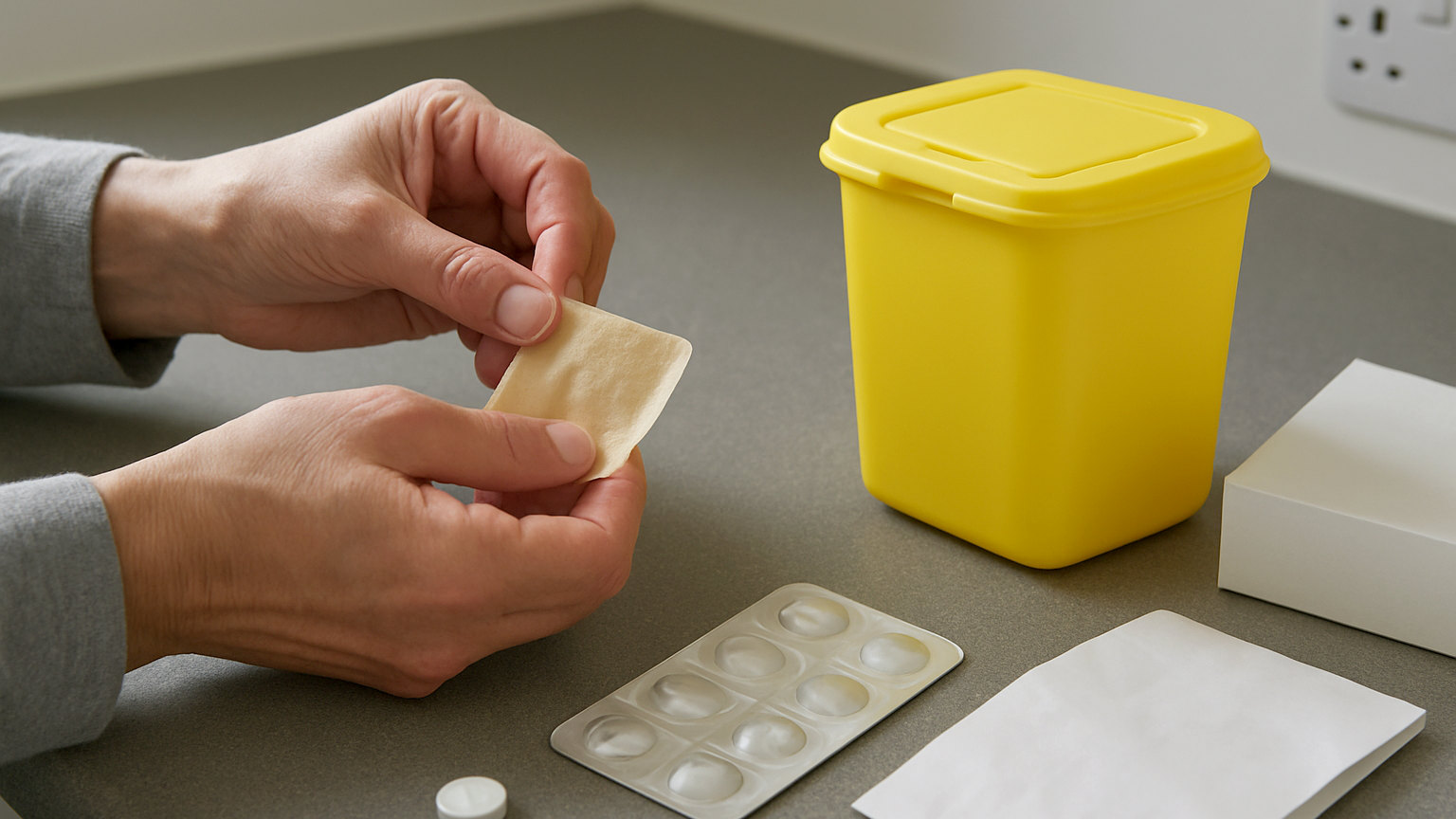
Returned medicines go into a dedicated waste container - commonly called a DOOP bin, for the disposal of old and unwanted pharmaceuticals.
They are collected by a licensed waste contractor and taken for high-temperature incineration, which destroys the active compounds rather than allowing them to enter landfill or the water system.
Pharmacies are not paid much for accepting them and are not obliged to sort or itemise ordinary returns.
Different waste streams exist - sharps, cytotoxic and cytostatic medicines, and general pharmaceutical waste all go separately, which is why returning things rather than binning them matters.
See disposing of leftover medicines.
Controlled drugs
These are handled differently.
Controlled drugs returned by a patient must be denatured - rendered irretrievable - before disposal, using a kit designed for the purpose.
Depending on the circumstances this may need to be witnessed and recorded.
That is why a pharmacist may take a moment over a returned opioid or methadone supply rather than simply dropping it in a bin, and why they may ask what it is.
Return them rather than keeping them - unused opioids in a household are a recognised risk to children, to visitors and to anyone struggling.
See storing medicines in a shared home.
Why they cannot be reused
The uncomfortable part, and the reasoning is about the one thing nobody can verify: storage.
Once a medicine has left the pharmacy, there is no way to know whether it sat in a hot car, a steamy bathroom, or next to a radiator - or whether it is what the box says it is.
The pharmaceutical chain depends on an unbroken record of conditions from manufacture to supply, and that record ends at the counter.
Tampering and contamination cannot be excluded either.
So even an unopened, in-date box cannot legally be redispensed. It is an honest trade-off rather than mere bureaucracy: the alternative is accepting an unquantifiable risk in exchange for a saving.
See why returned medicines cannot be reused and how to tell if a medicine has gone off.
Sending them abroad
A frequent and well-meaning suggestion, and one that aid organisations discourage.
The World Health Organization's guidelines on drug donations are clear that unsorted returned medicines are unhelpful - they arrive in small quantities of many different products, frequently near expiry, labelled in a language staff cannot read, and without the matching supplies needed to use them.
Sorting and disposing of unusable donations then consumes resources in the receiving country.
Established medical charities buy what is needed in bulk, to specification, which is far more effective.
If you want to help, donating money to such an organisation does considerably more than donating tablets.
The real answer is generating less
Very large quantities of dispensed medicine are never taken, and the waste is expensive as well as environmentally significant.
Three habits account for most of it:
Ticking every box on the repeat form regardless of what you need.
Not saying you have stopped taking something, so it continues on repeat for years.
Stockpiling, which also makes shortages worse.
Order only what you are running low on, tell the practice what you no longer take, and check the cupboard before ordering.
See ordering repeats, stockpiling makes shortages worse and medicines and the environment.
The cost of the waste
The sums are large. Hundreds of millions of pounds' worth of prescribed medicine goes unused in the NHS each year, and a substantial share of that is never opened.
That is money not spent on treatment, plus the cost of collecting and incinerating it. It is worth knowing when weighing whether to tick every box on a repeat form - the medicine you order and do not need is not free simply because you did not pay for it. See synchronising your repeat prescriptions.
What to return and how
Any pharmacy will take them - free, without appointment, and without questions.
Return tablets, capsules, liquids, creams, inhalers, patches and eye drops in their packaging. Do not decant or empty anything.
Needles and sharps go in a sharps bin instead - see needles and sharps disposal.
Remove or obscure the pharmacy label if you are recycling the outer carton, since it carries your name and address.
Never flush medicines and never put them in household waste.
After a death
Medicines belonging to someone who has died are returned to a pharmacy in the same way.
It is worth waiting a short period before doing so, in case a coroner needs to see them.
The Usage section covers more on taking medicines day to day - Clearing Out Your Medicine Cupboard is closely related to this one.