Instructions to take a medicine on an empty stomach are widely ignored, partly because they are inconvenient and partly because nobody explains why. For most medicines the reason is absorption: food physically blocks uptake, or binds the drug, or changes stomach acidity. For a handful the difference is large enough that taking it with breakfast means taking considerably less than was prescribed.
What it actually means
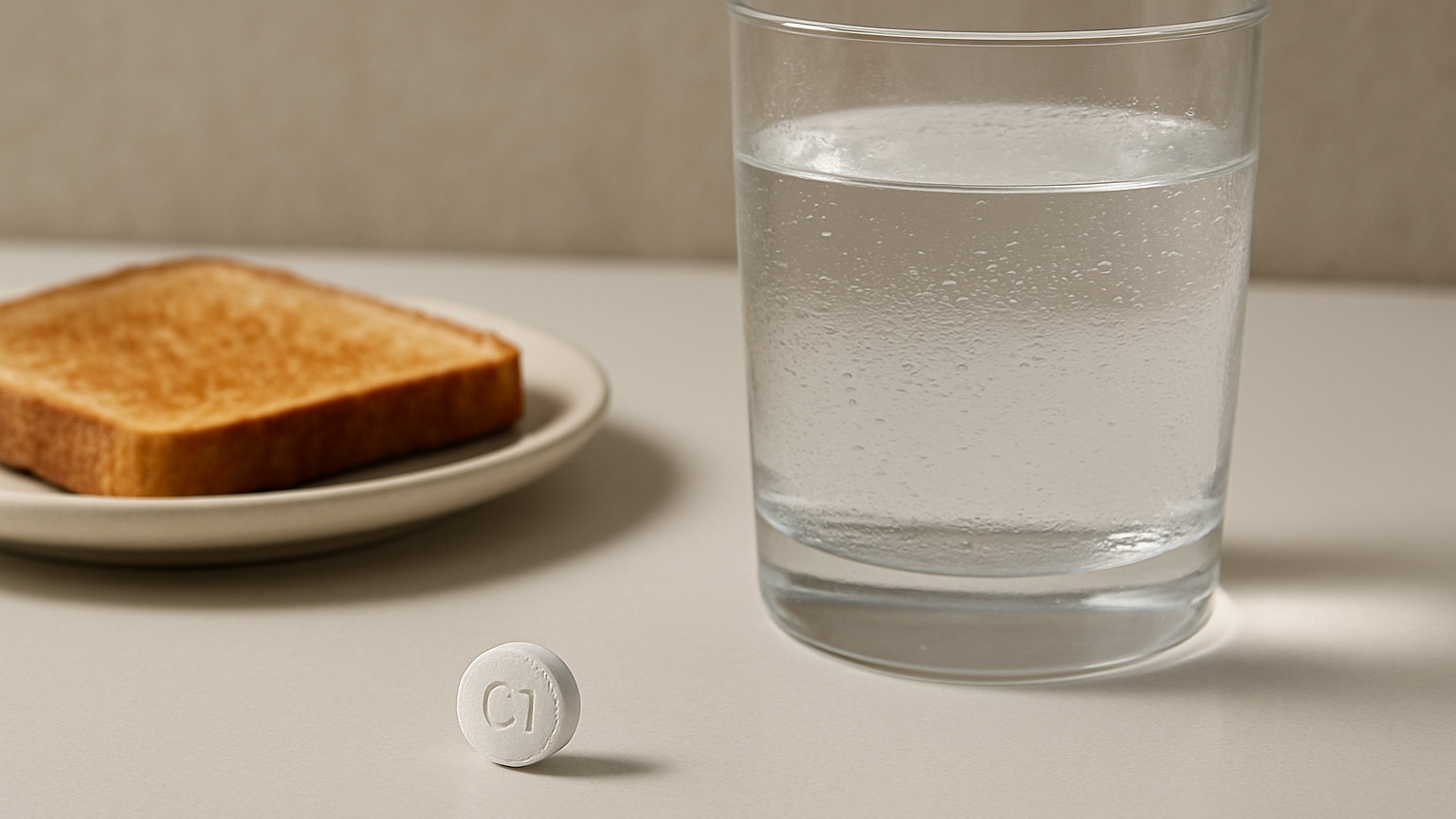
"On an empty stomach" generally means at least 30 minutes before food, or two hours after - a gap on both sides, which is the part most often missed.
Taking a tablet half an hour before breakfast and then eating is correct. Taking it immediately after a meal because the packet says "before food" is not.
Some medicines specify longer. Check your label rather than assuming the general rule.
Water is fine and encouraged. Tea, coffee, milk and juice are not - see below.
Levothyroxine
The clearest example, and the one affecting the most people.
Levothyroxine absorption is substantially reduced by food, and by coffee in particular - which is unfortunate, because taking it first thing with a cup of tea or coffee is exactly what people do.
Take it with water, at least half an hour before anything else. Some people find bedtime easier, several hours after the last meal, and that works equally well provided it is consistent.
Consistency matters as much as timing. Taking it the same way every day gives a stable level, which is what the blood test is measuring.
It also needs separating by several hours from iron, calcium, indigestion remedies and some other medicines, all of which bind it.
See levothyroxine, iron tablets and caffeine and your medicines.
Bisphosphonates
Alendronate and its relatives are absorbed extremely poorly at the best of times, and food essentially abolishes absorption.
The instructions are strict for that reason: first thing in the morning, with a full glass of plain water, sitting or standing upright, and nothing else - no food, no other medicines, no other drinks - for at least the stated period afterwards.
Staying upright is not about absorption. It is to stop the tablet lodging in the oesophagus, where it causes ulceration.
See alendronate.
Some antibiotics
Penicillin V is absorbed considerably less well with food, and is taken at least half an hour before or two hours after - which is genuinely awkward four times a day.
Amoxicillin, by contrast, can be taken with or without food, which is one reason it is often preferred.
Flucloxacillin also needs an empty stomach.
Tetracyclines and fluoroquinolones are a different problem - they bind to calcium, iron, magnesium and zinc, so it is dairy and supplements rather than food generally that matter. Separate them by a couple of hours.
See penicillin V and doxycycline - noting that doxycycline is one where a little food is acceptable to reduce nausea, provided it is not dairy.
Other medicines with timing rules
Sulfonylureas such as glipizide are taken shortly before a meal, so the insulin release matches the food arriving - see glipizide.
Proton pump inhibitors work best taken before a meal, because they act on actively secreting acid pumps.
Buspirone and tizanidine should be taken consistently with or without food, because switching changes how much is absorbed.
See buspirone.
When food is required instead
The opposite instruction is just as important, and the reasons differ.
To improve absorption - rivaroxaban at treatment doses is absorbed substantially less on an empty stomach, which can leave someone inadequately anticoagulated. See rivaroxaban.
To protect the stomach - anti-inflammatory painkillers and steroids.
To reduce nausea - metformin, antidepressants, many antibiotics.
See what "take with food" means.
Making it workable
The empty-stomach medicines are the ones most often taken wrongly, because the instruction fights the routine.
What helps: keep the tablet and a glass of water by the bed and take it on waking, which builds in the gap before breakfast naturally.
Or take it at bedtime, well after eating, if that suits your medicine and you can be consistent.
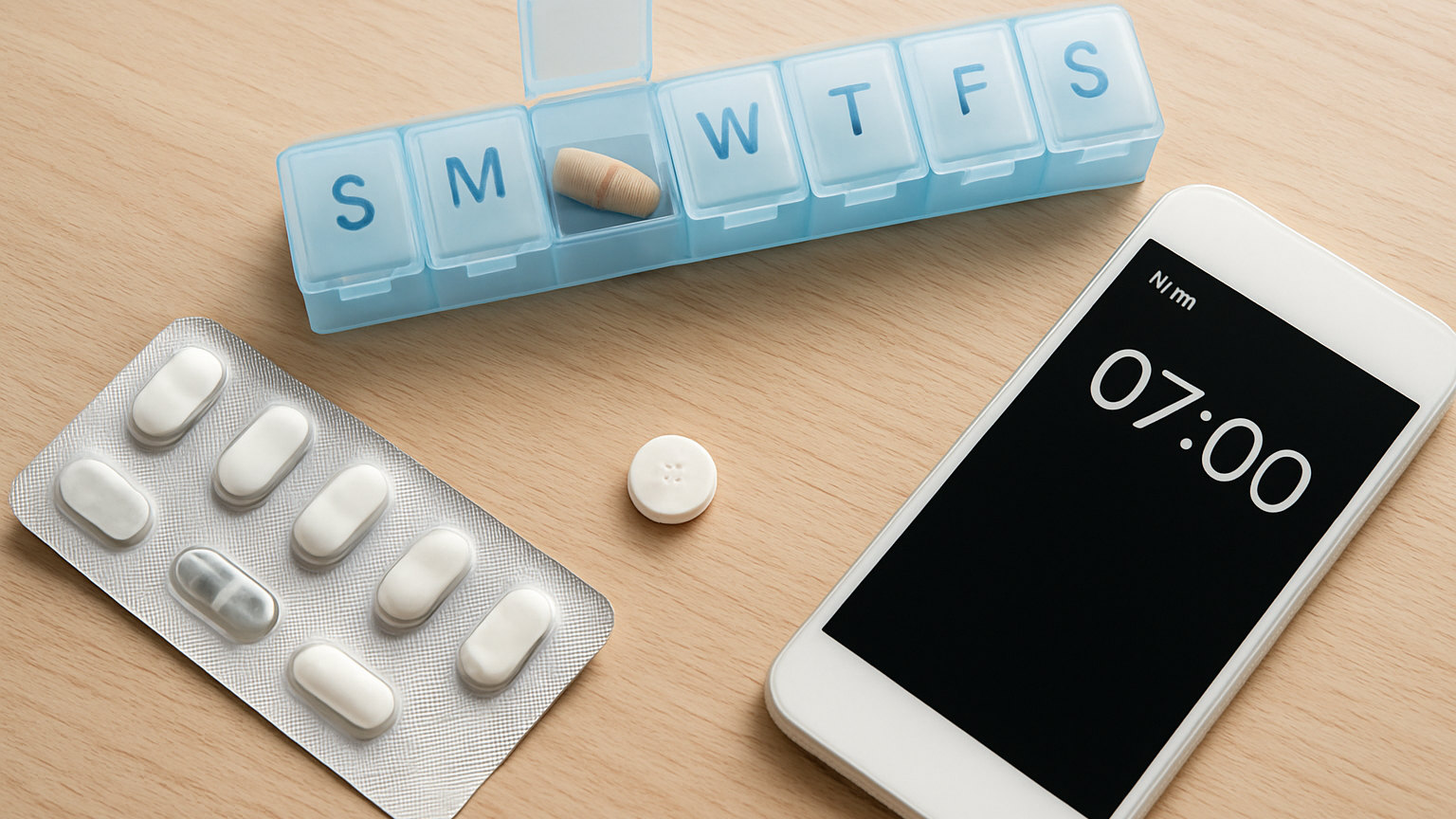
Set an alarm for the gap if you are likely to forget and eat.
See remembering to take your medicine.
If it is causing problems
If an empty-stomach medicine makes you feel sick, or the timing is unmanageable, say so rather than quietly taking it with food.
There may be an alternative, a different time of day, or a different drug in the same class without the restriction.
Taking it wrongly and assuming it is working is the outcome nobody wants - see questions to ask about a new medicine.
See also Foods That Interact With Medicines, and the Usage section for more on taking medicines day to day.