Grapefruit is the food interaction everyone has heard of, and it deserves its reputation. It is not the only one. Several ordinary foods and drinks change how medicines behave - by altering absorption, by competing with the drug's effect, or by adding to it. Most are manageable once you know about them, and the general principle is usually consistency rather than avoidance.
Grapefruit, and its relatives
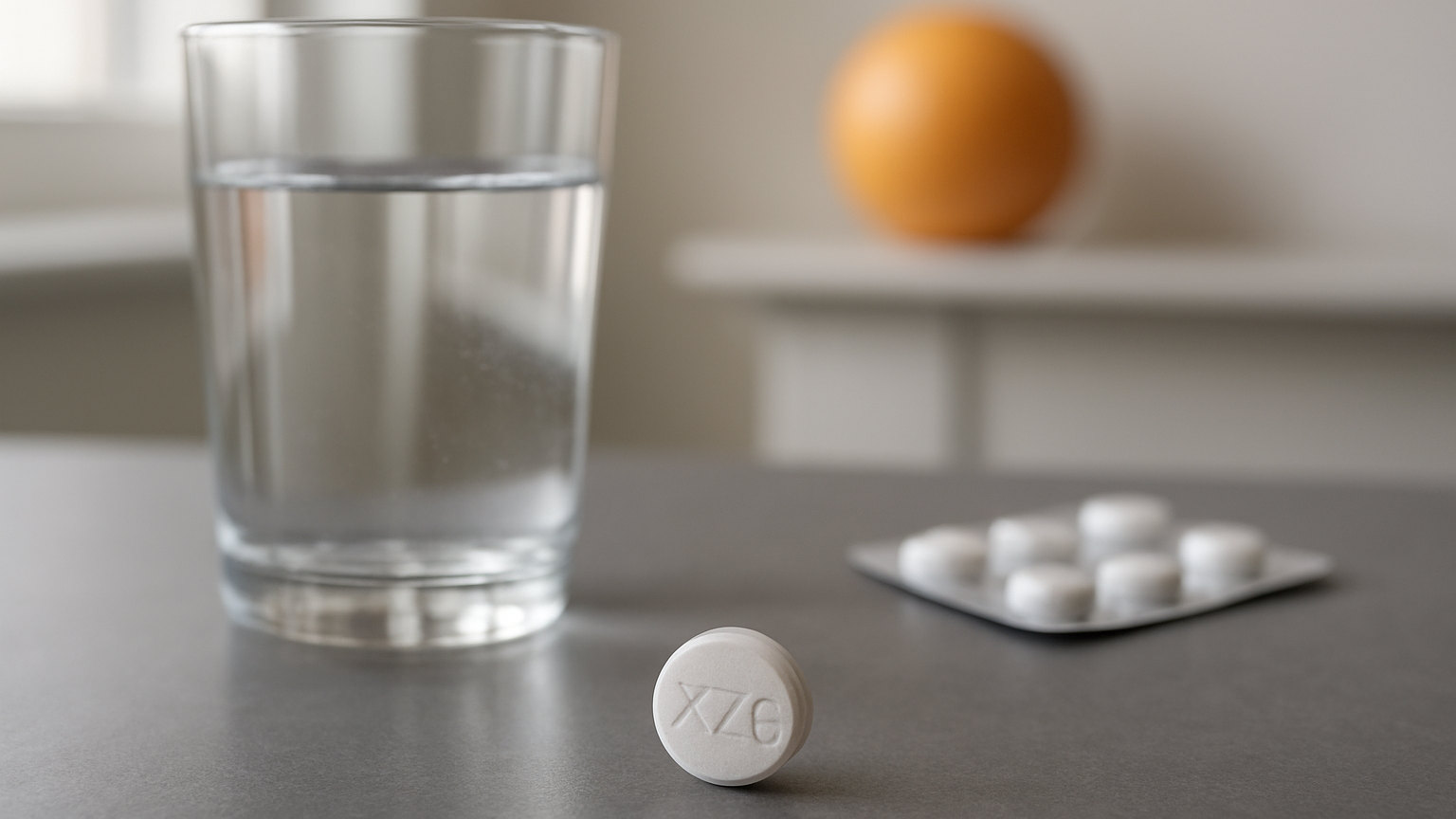
Grapefruit blocks an enzyme in the gut wall that breaks down many medicines before they are absorbed, so levels rise - sometimes severalfold.
The effect lasts far longer than the drink, so separating them by a few hours does not help.
Seville oranges and pomelo do the same; ordinary oranges do not.
Affected medicines include simvastatin, some calcium channel blockers, some immunosuppressants and several others - see grapefruit and medicines and simvastatin.
Green vegetables and warfarin: consistency, not avoidance
This is the most misunderstood food interaction there is.
Warfarin works by blocking vitamin K, and people told about the interaction frequently conclude they must avoid green vegetables entirely.
The advice is consistency. Your warfarin dose is set against your usual intake. A steady amount of broccoli, spinach, kale and green leaves is entirely fine.
What destabilises the INR is change - a sudden salad phase, a week of none, or a crash diet. Avoiding greens altogether makes you more sensitive to any you do eat, and costs you the nutrition.
See warfarin.
Cranberry
Cranberry juice has been reported to increase warfarin's effect, with bleeding episodes described.
The evidence is not uniform and large quantities seem to matter more than a glass, but guidance advises caution.
Cranberry products are widely taken for urinary infections, which makes the overlap with older people on warfarin quite common - worth mentioning.
Liquorice
Real liquorice - containing glycyrrhizin, as opposed to liquorice-flavoured sweets - causes the body to retain sodium and lose potassium, raising blood pressure.
Regular consumption can undermine blood pressure treatment, worsen low potassium from diuretics, and in large amounts cause serious arrhythmias.
It appears in liquorice tea and in some herbal remedies as well as in confectionery.
See potassium chloride.
Salt substitutes
This one catches people doing the right thing. Low-sodium salt substitutes replace sodium chloride with potassium chloride.
For someone taking an ACE inhibitor, an ARB, spironolactone or amiloride - all of which raise potassium - that can push potassium to dangerous levels.
Someone told to cut down on salt for their blood pressure buys a substitute and unknowingly adds a potassium load to a potassium-raising drug.
Check before using one if you take any of those - see lisinopril and spironolactone.
Tyramine
Tyramine is found in aged cheese, cured and fermented meats, yeast extract, soy sauce, some broad beans, and tap beers and real ales.
With monoamine oxidase inhibitors, tyramine cannot be broken down and causes a sharp, dangerous rise in blood pressure - the so-called cheese reaction.
Anyone on a traditional MAOI is given detailed dietary advice. Linezolid, an antibiotic, is a weak MAOI and carries a milder version of the same caution.
Dairy, iron and calcium
Several medicines bind to calcium, iron, magnesium and zinc, which prevents them being absorbed.
That affects tetracyclines, fluoroquinolones, levothyroxine, bisphosphonates and others.
The solution is timing rather than avoidance - separate them by a couple of hours.
See medicines, milk and dairy, levothyroxine and iron tablets.
Fruit juice and absorption
Less well known: orange and apple juice block transporters that carry some drugs into the body, reducing absorption.
Fexofenadine is the clearest example - levels fall substantially when it is taken with juice, so it should be taken with water.
See fexofenadine.
Caffeine and alcohol
Both appear elsewhere on this site because they affect so much - see caffeine and your medicines and medicines and alcohol.
Timing versus avoidance
Most food interactions are solved by timing rather than by giving something up.
Where a food blocks absorption, separating them by a couple of hours resolves it. Where a food adds to the drug's effect - liquorice, salt substitutes, tyramine - avoidance or strict limitation is needed. Where consistency is the issue, as with warfarin and vitamin K, what matters is keeping your intake steady rather than low. Knowing which of the three applies is the practical question to ask.
What to do about it
Read the leaflet, which lists food interactions for your specific medicine.
Ask the pharmacist when you collect something new - it takes a moment.
Mention dietary changes at reviews, particularly starting a restrictive diet, a large change in alcohol, or beginning a supplement.
Supplements are not inert simply because they are sold freely - see supplements that interfere with your medicines.
If this was useful, Taking Medicines on an Empty Stomach is worth reading next, and Usage collects the rest.