
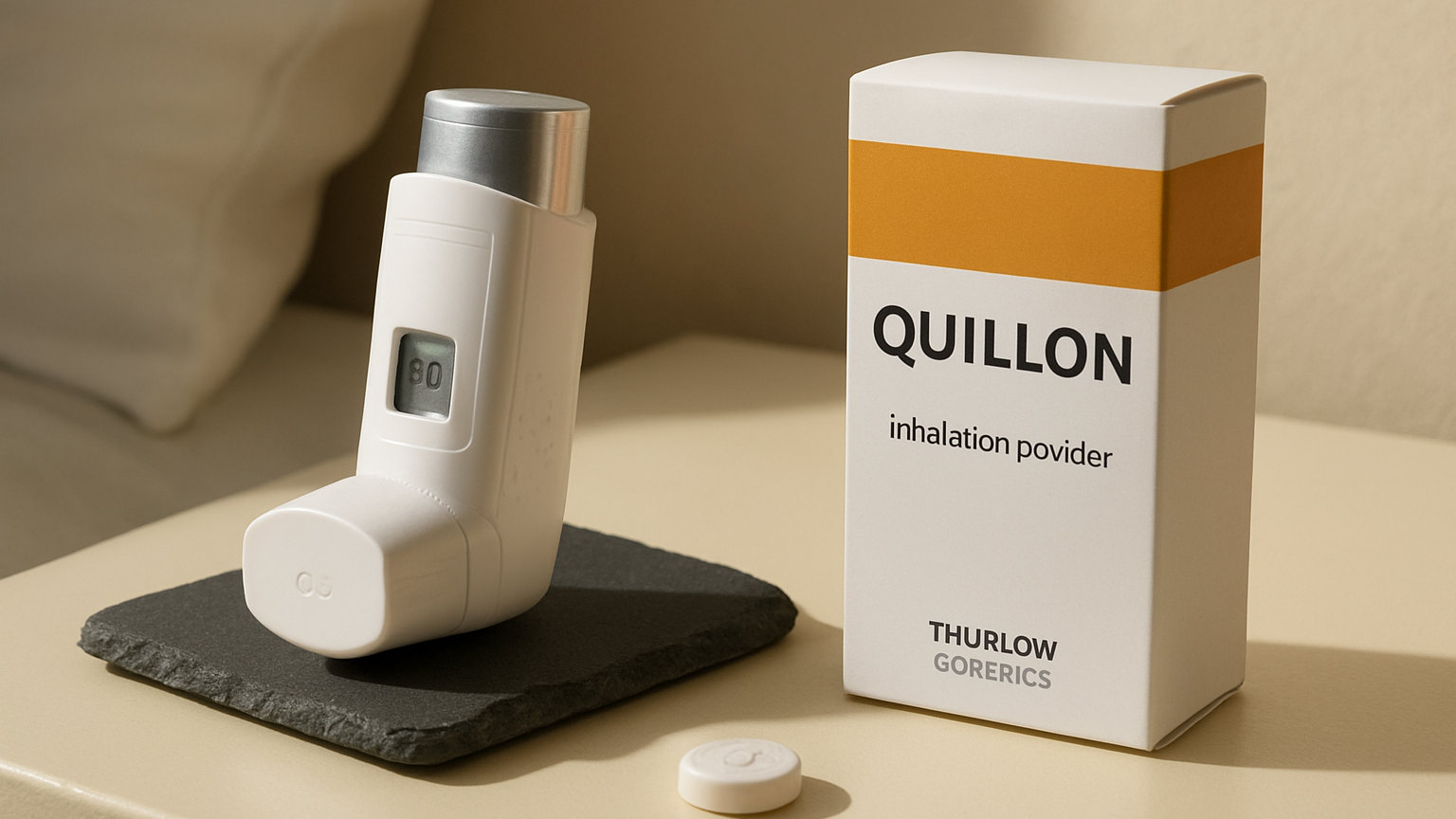
Tiotropium is a long-acting muscarinic antagonist - a LAMA. It blocks the signals that keep airway smooth muscle partly contracted, producing sustained widening over twenty-four hours from a single dose. It is a cornerstone of COPD treatment and is used as an add-on in difficult asthma. Two things cause most of the confusion around it: it does nothing during an attack, and it comes in two devices that are operated in completely different ways.
Follow the instructions on your label and your action plan. This guide contains no doses.
It is not a reliever
Tiotropium works slowly and lasts a long time. In a sudden attack of breathlessness it is useless.
Your reliever remains the inhaler you use when symptomatic - salbutamol, or an ipratropium-containing reliever. Tiotropium is taken once a day whether you feel breathless or not.
Ipratropium is the short-acting relative of tiotropium, and the two should not be used together - if you are on tiotropium, a separate ipratropium reliever is generally stopped.
See salbutamol and preventers and relievers.
The two devices
This matters more than people expect, because technique differs fundamentally.
The dry powder device requires you to place a capsule in the chamber, pierce it, and then breathe in hard and fast - your own breath has to lift and disperse the powder. A weak inhalation delivers nothing.
The soft mist inhaler releases a slow-moving cloud, and requires you to breathe in slowly and deeply - the opposite instruction.
Someone switched between the two and given no retraining will often use the new one as they used the old one, and get no benefit. If your device changes, ask to be shown.
With the capsule device, the capsules are never swallowed - a genuine and recurring error. See using your inhaler properly.
What to expect from it
In COPD, tiotropium improves breathlessness and exercise capacity and reduces exacerbations. It does not reverse the underlying damage or restore lost lung function.
Benefit builds over days to weeks rather than appearing immediately, so judging it after two days is judging it too early.
The things that change the course of COPD are stopping smoking, pulmonary rehabilitation and vaccination. Pulmonary rehab in particular improves breathlessness and quality of life more than any inhaler, and is under-referred - it is worth asking about. See COPD and what your inhalers do.
Combination inhalers
Tiotropium is often combined with a long-acting beta agonist in one device, and triple therapy adding an inhaled steroid is used for people with frequent exacerbations.
Inhaled steroids in COPD raise the risk of pneumonia, so they are used more selectively there than in asthma - generally where there are frequent exacerbations or an asthma component. See fluticasone.
Having several inhalers containing overlapping ingredients is a common problem after a change. If you have more than one, ask a pharmacist to check none duplicates another.
In asthma
Tiotropium is used as an add-on in asthma that remains uncontrolled on an inhaled steroid plus a long-acting beta agonist.
It is never a substitute for the inhaled steroid, which treats the underlying inflammation.
Side effects
Dry mouth is the commonest, and it matters more than it sounds because saliva protects teeth. Sipping water, sugar-free gum and telling your dentist all help - see dry mouth from medicines and high-fluoride toothpaste.
Sore throat, cough, constipation and hoarseness occur.
Because it is antimuscarinic, it can worsen narrow-angle glaucoma and cause urinary retention in men with prostate enlargement.
Seek urgent help for a painful red eye with blurred vision and haloes around lights, or if you cannot pass urine at all. Avoid spraying the soft mist inhaler towards the eyes.
Very little is absorbed systemically, so these effects are uncommon - but tell your prescriber about glaucoma or prostate symptoms. See tamsulosin.
When to seek help
Call 999 if you are too breathless to speak in full sentences, your reliever is not helping, your lips look blue or grey, or you feel your breathing is getting worse quickly.
For COPD, a rescue pack of antibiotics and steroids kept at home is part of many action plans - know when to start it and tell your team when you do. See prednisolone.
Checking your technique
Inhaler technique deteriorates over time, and studies consistently find a large proportion of people using devices incorrectly - frequently people who have used the same inhaler for years.
Ask a pharmacist or practice nurse to watch you use it, at least annually and whenever a device changes. It takes two minutes, it is free, and it is the single most common reason inhaled treatment underperforms.
Recycling
Dry powder devices contain no propellant and have a much lower carbon footprint than pressurised inhalers. Return all empties to a pharmacy rather than the bin - see why returned medicines cannot be reused.
More on what medicines are prescribed for in the Conditions section, including Budesonide: Preventer and MART Inhalers.


