Household medicines are a leading cause of poisoning in pets, and the routes are mundane: a tablet dropped on the kitchen floor, a dosette box left on a coffee table, a discarded patch in a bin the dog can reach. Dogs eat things quickly and indiscriminately. Cats are affected by smaller amounts of some drugs than most people would imagine. A little awareness prevents nearly all of it.
Paracetamol and cats
This is the most important single fact. Cats cannot metabolise paracetamol - they lack the enzyme pathway that handles it - and a very small amount is fatal.
A fraction of a single adult tablet can kill a cat. It damages red blood cells and the liver, causing brown gums, facial and paw swelling, breathing difficulty and collapse.
Never give paracetamol to a cat, and treat any suspected ingestion as an emergency.
Dogs tolerate paracetamol somewhat better but are still poisoned by human doses.
See paracetamol.
Anti-inflammatories
Ibuprofen, naproxen and diclofenac are considerably more toxic to dogs and cats than to people, causing stomach ulceration, bleeding and kidney failure at doses well below a human tablet.
Owners sometimes give ibuprofen to a limping dog with good intentions. It is a common and serious mistake - veterinary anti-inflammatories exist and are dosed quite differently.
Never give human painkillers to an animal.
See naproxen.
Used patches
A used patch still contains a substantial amount of drug - enough to kill a dog or a cat that chews or swallows one.
Fentanyl and buprenorphine patches are the serious ones, and deaths have occurred from patches retrieved from bins or found after falling off in bed.
Fold used patches sticky sides together and return them to a pharmacy or dispose of them where no animal can reach.
Check daily that your patch is still in place.
See fentanyl patches and disposing of leftover medicines.
Creams, gels and sprays
This route is much less obvious. Anything applied to your skin can transfer to an animal that licks or rubs against you.
Hormone gels and sprays - oestrogen and testosterone - have caused hormonal problems in pets through exactly this route, and the same applies to children.
5-fluorouracil cream, used for sun-damaged skin, is extremely toxic to dogs and cats and small exposures have been fatal.
Wash your hands after applying anything topical, cover treated areas where practical, and keep the tube out of reach - chewed tubes are a recognised cause of poisoning.
See estradiol and fluorouracil cream.
Other common culprits
- Antidepressants - particularly SSRIs and venlafaxine, causing agitation, tremor and seizures
- Sleeping tablets and benzodiazepines - dogs can become paradoxically excited rather than sedated
- ADHD stimulants - dangerous even in small amounts
- Beta blockers and calcium channel blockers - severe drops in heart rate and blood pressure
- Vitamin D preparations, including high-strength supplements - raising calcium and damaging kidneys
- Xylitol, a sweetener in some sugar-free liquid medicines and gums - causes a dangerous fall in blood sugar in dogs
Practical prevention
The measures that prevent most incidents are the same ones that protect children.
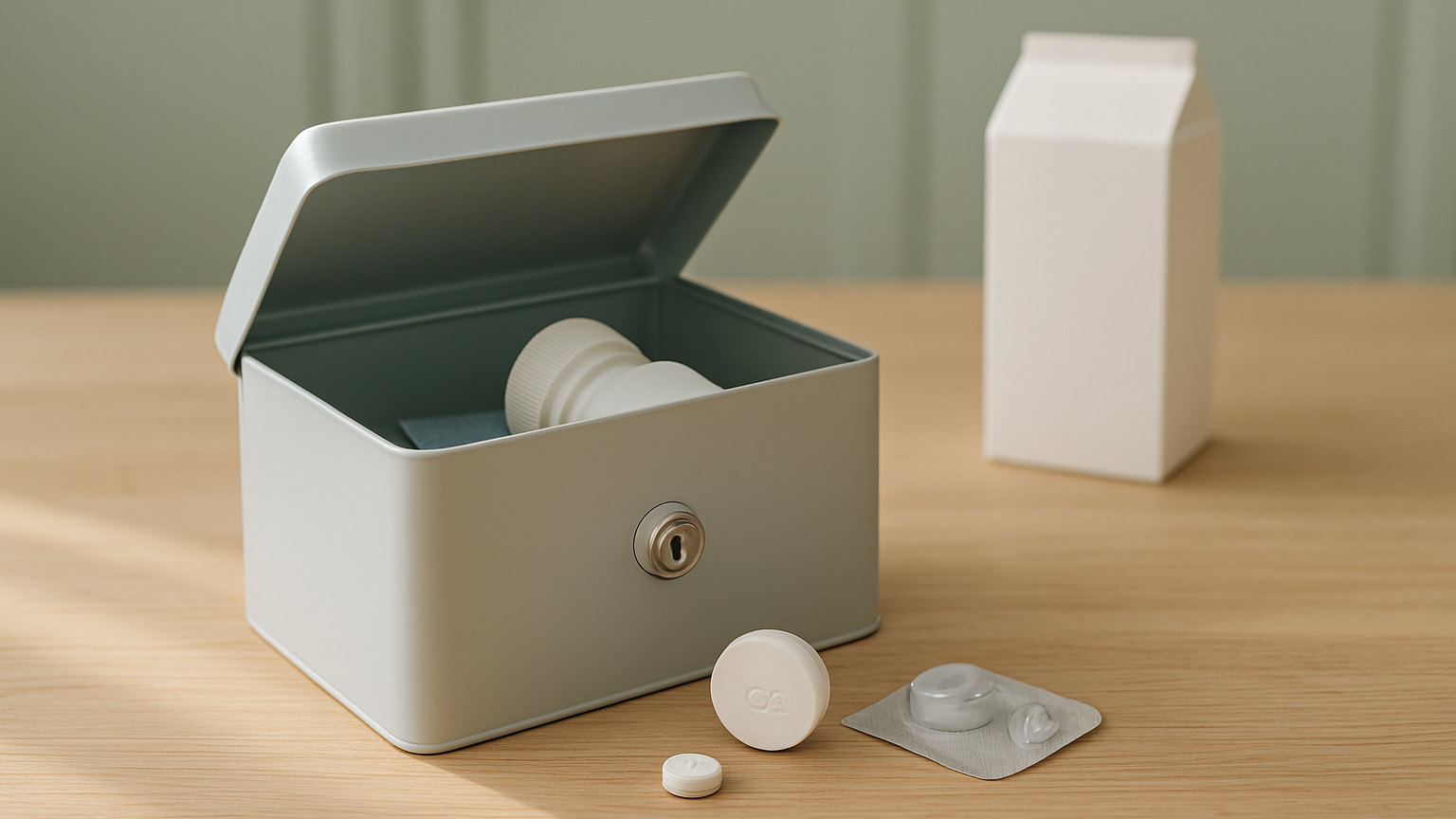
Store medicines in a closed cupboard, not on a bedside table, a windowsill or a kitchen worktop.
Take tablets over a surface where a dropped one can be found, and count what you drop. Dogs will find a tablet under a cupboard before you do.
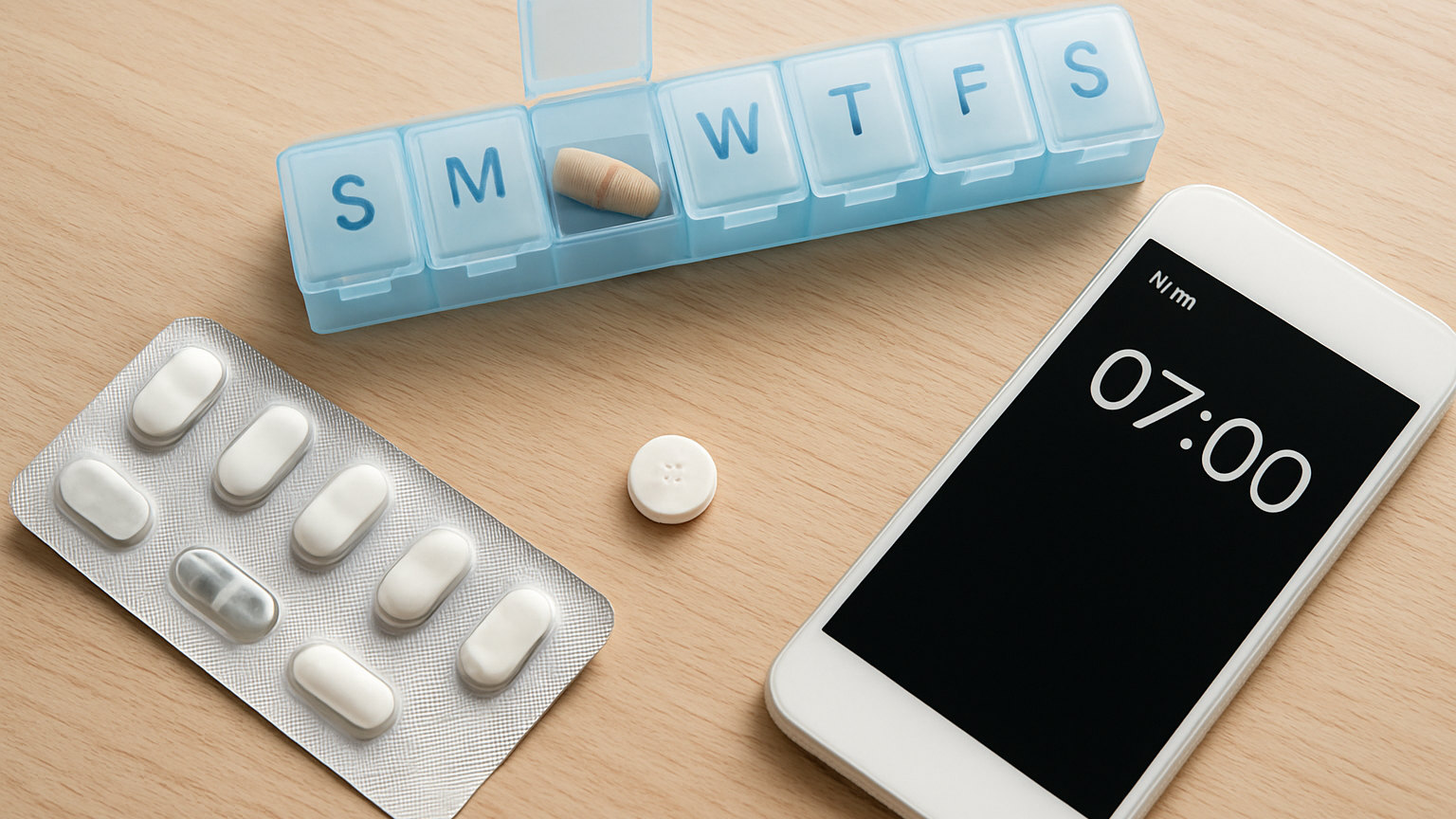
Do not leave a dosette box out. A week's medicines in one chewable container is a considerable dose.
Use a bin with a lid the animal cannot open, particularly for patches, applicators and sharps.
Keep handbags off the floor - a frequent source, and visitors' bags especially.
See keeping medicines away from children and blister packs and dosette boxes.
If your pet swallows something
Contact a vet immediately - do not wait for symptoms, since with several of these the damage is done before the animal looks unwell.
Take the packaging with you so the vet knows exactly what and how much.
Do not try to make the animal vomit unless a vet tells you to. Home remedies for this, including salt water, are dangerous.
The Animal PoisonLine, run by the Veterinary Poisons Information Service, gives owners advice on whether a veterinary visit is needed. Your vet has access to the full service.
Assistance dogs and working animals
If you have an assistance dog, it is with you constantly and near your medicines constantly.
The same precautions apply with more emphasis, particularly around patches, topical treatments and anything kept in a bag at floor level.
See also How to Tell if a Medicine Has Gone Off, and the Usage section for more on taking medicines day to day.