Travelling with a child's medicines involves the same rules as an adult's, with three additions that cause most of the problems: liquid volumes and airport security, emergency medicines that must be reachable rather than packed, and the fact that children's preparations come in different strengths in different countries. That last one is where holiday dosing errors come from.
Take more than you need
Take at least twice what the trip requires, and split it between two bags so a lost bag is not a lost holiday.
Request extra well in advance rather than the week before - practices will usually provide a reasonable amount for a holiday, and last-minute requests are the ones that get refused.
Include anything used only occasionally, since being away is exactly when a rescue pack or an as-required medicine turns out to be needed.
See extra medicine before a holiday.
Hand luggage, always
Aircraft holds get cold enough to freeze liquids and biologics, and bags get lost.
Medicines, including liquids over the usual limit, are permitted in hand luggage with supporting evidence.
Carry:
- Medicines in original labelled packaging with the child's name on the pharmacy label
- A copy of the repeat prescription
- A letter from the GP or clinic naming the child, the condition, the medicines by generic name, and the need to carry them - including needles and liquids
Tell security staff before screening rather than after.
Practices usually charge for a travel letter, since it is not an NHS service. Ask early.
See flying with prescription medicines.
Strengths differ abroad
The detail most likely to cause harm.
Children's liquid paracetamol and ibuprofen come in more than one strength in the UK, and the strengths available in other countries differ again - as do the measuring devices supplied and the units printed on them.
Do not assume the volume you use at home applies to a bottle bought abroad.
If you buy something overseas, check the strength on the label, use the device that came with it, and ask a pharmacist to confirm the amount for your child's weight.
Better still, take enough from home that you do not need to buy any.
Know your child's current weight before you travel, since most children's doses are calculated from it.
See giving medicines to children and measuring liquid medicines accurately.
Emergency medicines stay reachable
A reliever inhaler, an adrenaline auto-injector or a rescue medicine is no use in an overhead locker or a hotel safe.
Keep them on the person or in a bag that stays with you, and take two auto-injectors where they are prescribed.
Make sure everyone travelling knows where they are and how to use them - including grandparents, older siblings and anyone supervising.
Check expiry dates before you go. Devices kept for emergencies expire quietly.
See adrenaline auto-injectors and as-required medicines.
Heat, cold and the car
A car in summer exceeds any temperature a medicine is tested at within minutes, and a glovebox is not storage.
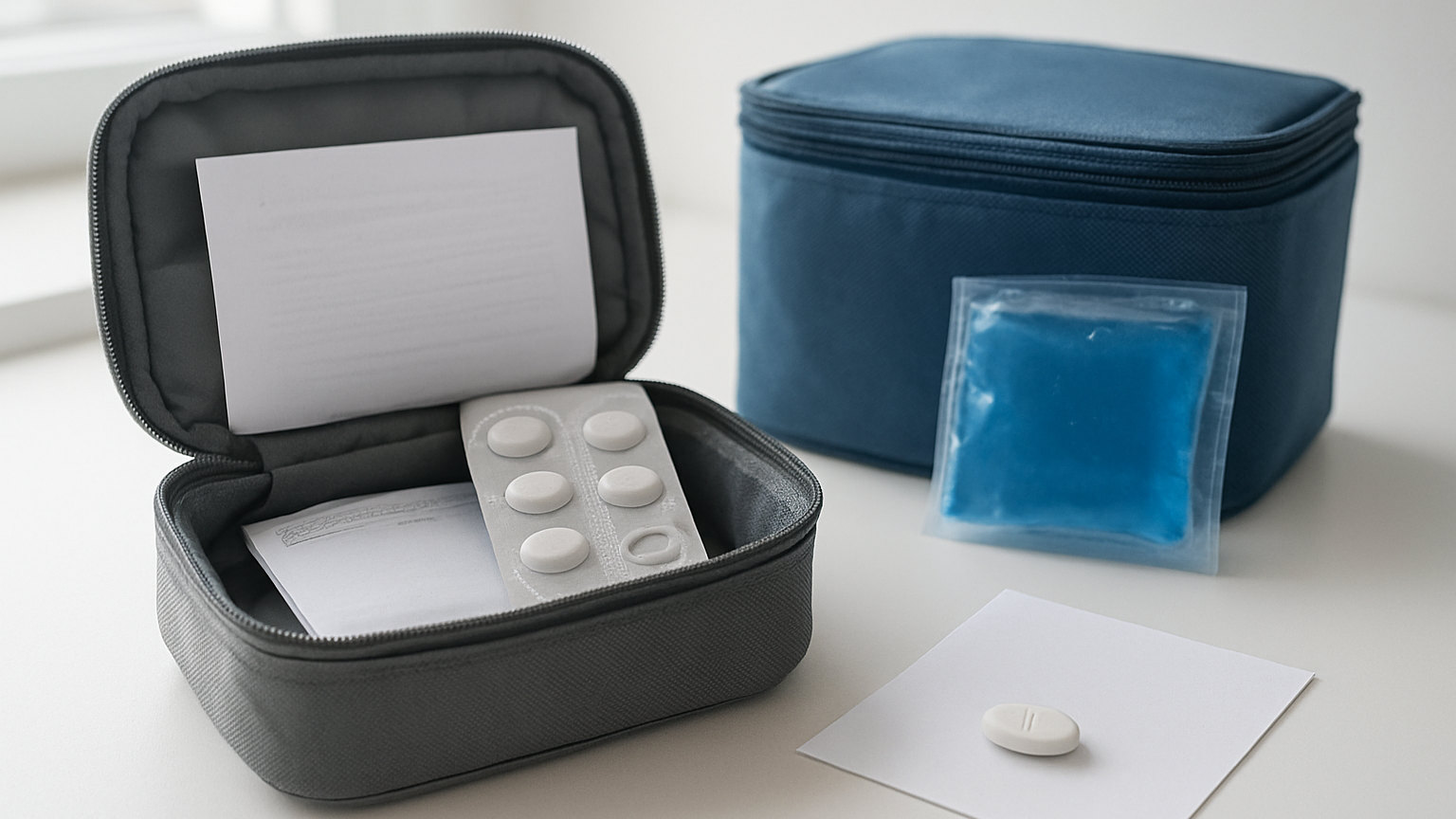
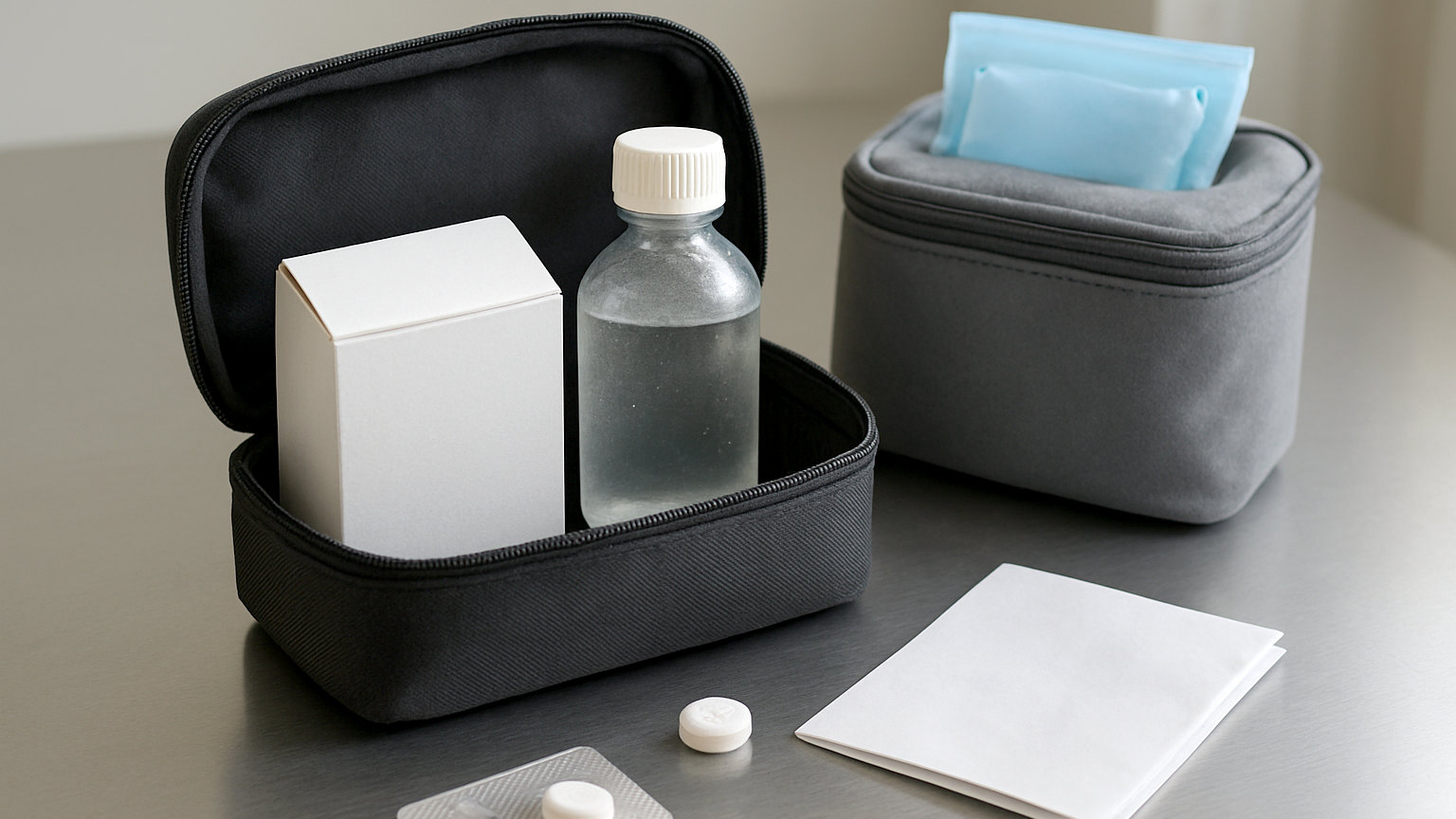
Refrigerated medicines need a cool bag with wrapped gel packs, or an evaporative cooling wallet that needs only water. Never let medicine touch a frozen gel pack directly - freezing destroys insulin and most biologics permanently.
Hotel minibars run far colder than a domestic fridge and are a common cause of frozen insulin.
See travelling with medicines that need a fridge and medicines in hot weather.
Time zones
For most children's medicines, shifting gradually over a couple of days is fine.
For insulin, anti-epileptics and anything where timing is tight, ask the specialist team for a written plan before you travel rather than working it out on the aircraft.
See medicines across time zones.
Check what is permitted
Ordinary UK medicines are controlled or prohibited in some countries - codeine, ADHD medicines and pseudoephedrine among them, and several of these are prescribed to children.
Check with the embassy of every country you will enter, including transit stops, weeks ahead.
See medicines that are illegal in other countries.
If a child is old enough to carry their own
Older children and teenagers usually carry their own reliever inhaler or auto-injector, and that is generally encouraged.
Travelling changes the calculation slightly: a bag left on a beach or in a hotel room is a device not with the child. Agree before you go who carries what, and keep a second device with an adult. See as-required medicines.
Insurance and paperwork
Declare the child's conditions and medicines on the travel insurance. An undeclared condition is the commonest reason a claim is refused.
Take a GHIC for European travel, remembering it is not insurance and does not cover repatriation.
Carry a note of allergies and the generic names of everything the child takes, in case treatment is needed abroad.
The Usage section covers more on taking medicines day to day - Medicines, Altitude and Diving is closely related to this one.