Medicines kept only at home are useless during the two-thirds of waking life spent somewhere else. That matters most for emergency treatment - a reliever inhaler, an adrenaline auto-injector, a GTN spray - where minutes count and there is no time to go home. Both schools and workplaces have established arrangements for this, and most people are never told they exist.
Schools: what is in place
Schools in England have a duty to support pupils with medical conditions, and statutory guidance sets out how.
The mechanism is an individual healthcare plan, drawn up with parents and healthcare professionals, describing the condition, the medicines, who administers them, and what to do in an emergency.
Ask for one if your child has asthma, allergies, epilepsy, diabetes or any condition needing treatment during the day.
The other nations have equivalent arrangements under their own guidance.
Spare emergency medicines at school
Two provisions worth knowing about specifically.
Schools may hold spare salbutamol inhalers for use in an emergency by pupils with asthma, with parental consent recorded.
Schools may also hold spare adrenaline auto-injectors for pupils at risk of anaphylaxis.
These are backups for a device that is lost, broken, out of date or left at home - they do not replace the child's own.
Ask whether your child's school holds spares, and make sure consent forms are completed.
See adrenaline auto-injectors and salbutamol.
Practical points for parents
Supply medicines in the original labelled packaging, with the pharmacy label showing the child's name and directions. Schools should not accept unlabelled medicines.
Check expiry dates each term - devices left in a school office expire quietly.
Make sure the child can use the device, and that staff know where it is kept and how it works. Storage should be accessible rather than locked away, since a locked cupboard in an emergency is no better than a device at home.
Update the plan when treatment changes, particularly if an inhaler device changes - the breathing technique for the two types is opposite.
Older children can usually carry their own reliever, which is generally encouraged.
See when your inhaler or device changes and giving medicines to children.
At work
There is no equivalent statutory scheme, but two things apply.
Under the Equality Act, employers must make reasonable adjustments for disabled employees - which can include somewhere private to take or inject medicines, a fridge, breaks at set times, or adjusted duties.
Occupational health can advise, and any medicine required for the job itself is the employer's responsibility rather than the NHS.
You are not obliged to disclose a health condition, though telling at least one colleague what to do in an emergency is worth weighing against privacy.
See prescriptions for travel and occupational health.
Storing them at work
A desk drawer or a bag is not ideal but is usually the reality.
Keep them labelled and in their packaging, so nobody mistakes them for something else and so the details are available in an emergency.
Not on a windowsill or near a radiator - heat degrades tablets, and a sunny office can get very warm.
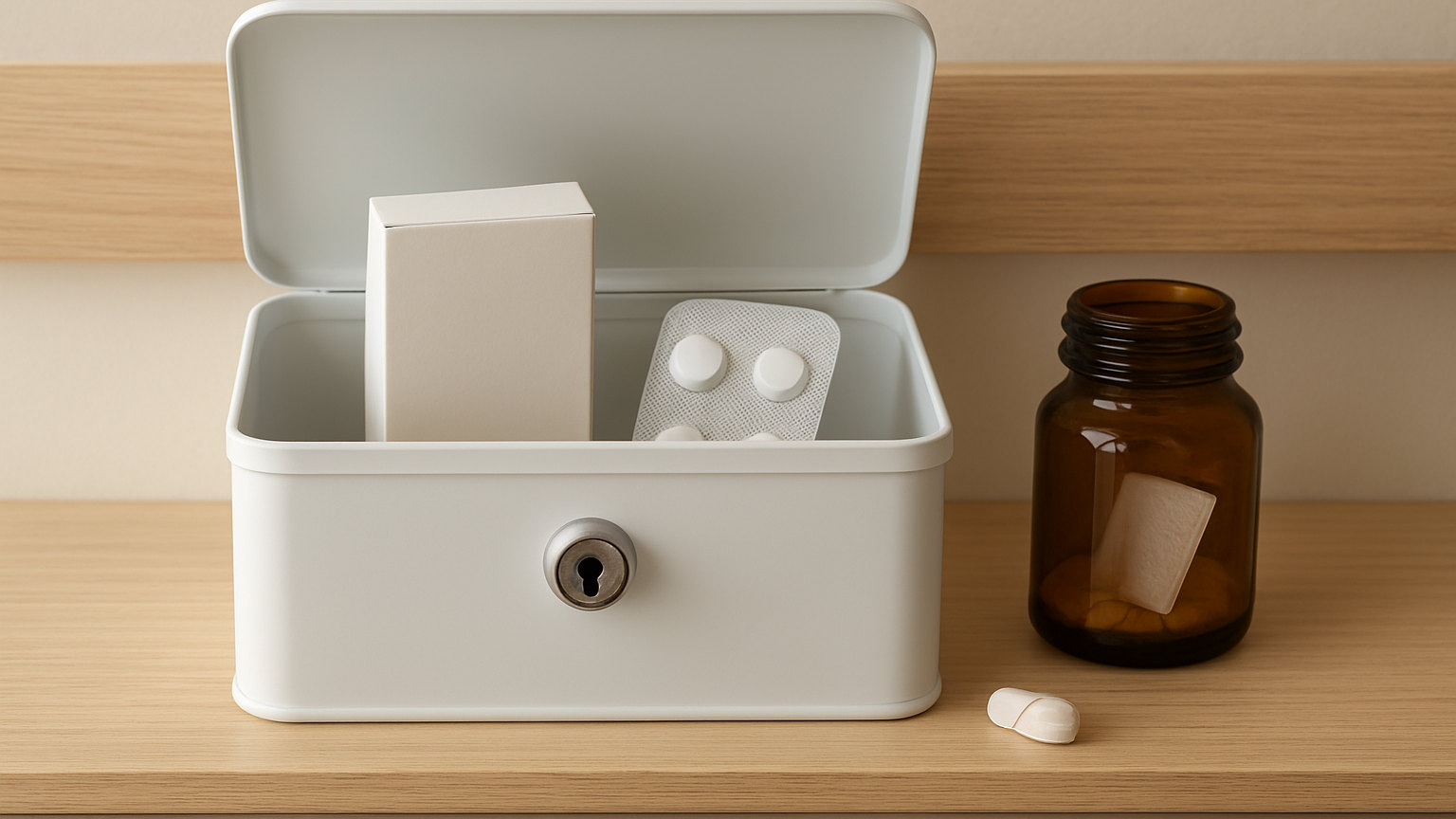
Use a lockable drawer for anything liable to misuse - opioids, benzodiazepines, gabapentinoids and stimulants. These are the medicines that go missing from shared workplaces, and replacing a controlled drug early is difficult.
Do not leave bags on the floor where children visit, and be aware of anyone bringing children into the workplace.
See storing medicines in a shared home.
Fridge medicines at work
Insulin and biologics need care if stored in a shared fridge.
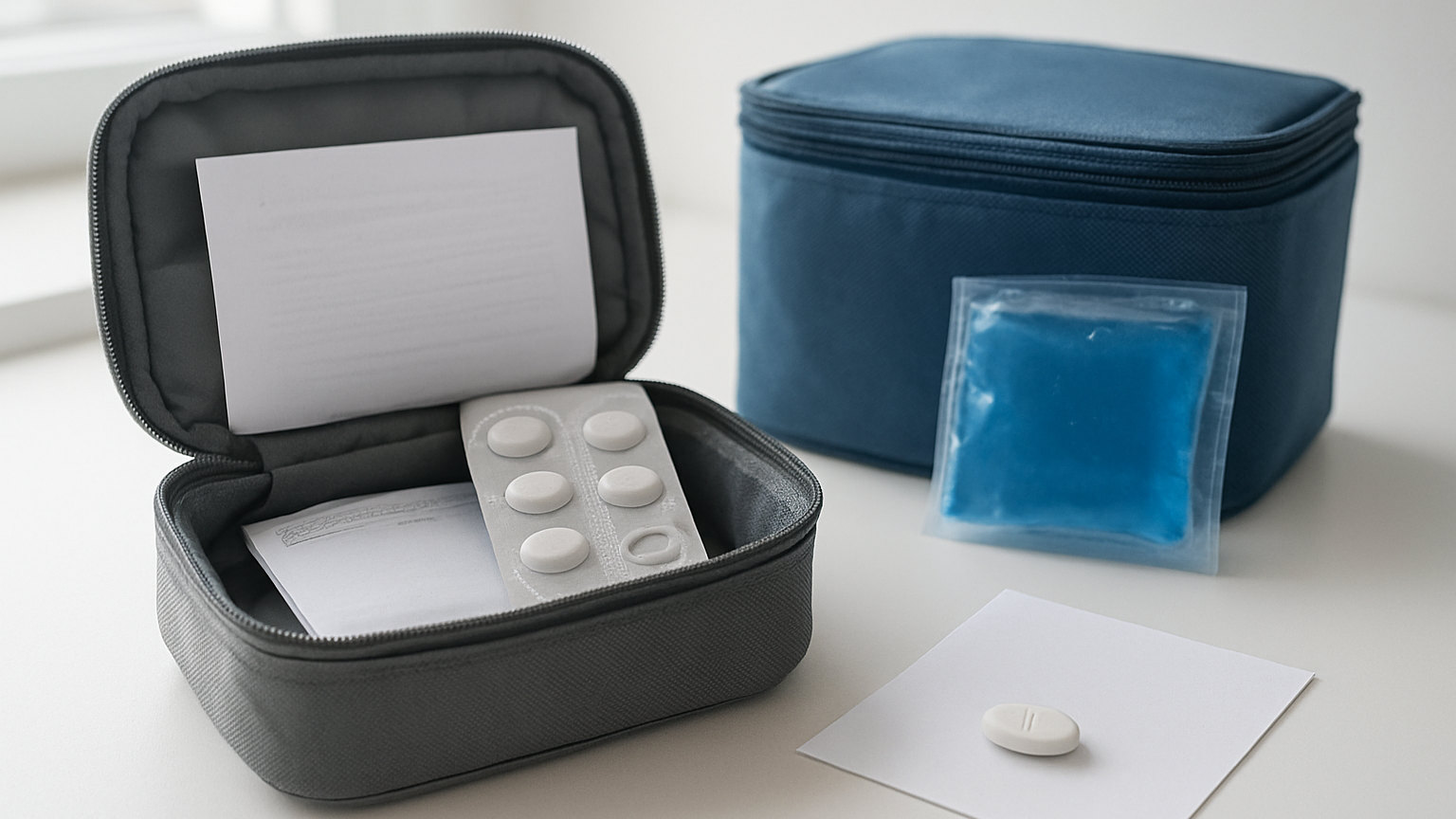
Keep them in a labelled, closed container rather than loose among food, and away from the back wall and the cooling element, which is where things freeze.
Freezing destroys insulin and most biologics permanently, even if they look normal afterwards.
Remember that insulin in use is kept at room temperature anyway, so a pen in your bag is fine.
See medicines that need the fridge and power cuts and fridge failures.
Sharps and disposal
If you inject at work, take a small sharps container. Needles must never go in office bins.
See needles and sharps disposal.
Trips, residentials and college
School trips and residential visits need planning separately, since the usual arrangements do not travel with the child.
Make sure medicines go with a named member of staff, that the healthcare plan goes too, and that spares are packed. For older students at college or university, the same applies without anyone organising it for them - registering with a local GP and knowing where the nearest pharmacy is matters before something goes wrong. See registering with a GP and your medicines.
Driving and shift work
If your job involves driving, operating machinery or working at height, the sedating effects of some medicines matter more.
Tell your prescriber what you do for a living - it changes what is sensible.
See medicines and driving and medicines and shift work.
More on taking medicines day to day in the Usage section, including An Emergency Bag for Your Medicines.