Prescribed medicines have an obvious route out of the house - back to the pharmacy. Everything else accumulates: painkillers bought years ago, half a bottle of vitamins, a cream from a holiday, something ordered online that never got used. People bin these, or keep them indefinitely, because it is not obvious the same route applies. It does.
Pharmacies take it all
Community pharmacies accept unwanted medicines from the public regardless of where they came from - prescribed, bought over the counter, bought abroad, or bought online.
There is no charge, no appointment, and no need to explain.
Bring it in whatever container it is in. Do not empty it out, rinse it or decant it - handing over a full bottle is exactly what they want.
The same applies to items you cannot identify. Take them in rather than guessing.
See unidentified medicines in the home.
Supplements and herbal products
These are regulated as foods rather than medicines, which is why the disposal question feels different. In practice a pharmacy will usually accept them, and they should not go down the sink.
Worth clearing out for a second reason: supplements are the items most often missing from a medicines list, and a cupboard full of half-used bottles is how people end up taking the same nutrient from three products at once.
Several genuinely interact - St John's wort, high-dose fish oil, kelp, and anything containing grapefruit.
See supplements that interfere with your medicines and which supplements are worth taking.
Things bought abroad or online
These deserve particular attention.
Medicines bought overseas may contain ingredients not permitted here, may be at different strengths, and may be controlled drugs in the UK even where they were sold freely elsewhere.
Imported traditional remedies have repeatedly been found to contain undeclared steroids, heavy metals or prescription medicines - so a cream that worked remarkably well may be exactly the one to get rid of.
If you suspect a product is falsified or adulterated, keep the packaging and report it to the MHRA rather than simply disposing of it.
See herbal medicines and traditional remedies and reporting a faulty or fake medicine.
Never down the sink or toilet
Flushing puts pharmaceuticals into the water system, and treatment works cannot remove most of them.
Measurable quantities of painkillers, antidepressants and hormones are detectable in rivers, with documented effects on fish.
Household waste is not the answer either - it ends up in landfill, and anything a child or animal could reach from a bin is a hazard on the way.
See medicines and the environment.
Things needing separate handling
Sharps - needles, pen needles and lancets go in a sharps container, never a bin and never a drinks bottle. This includes anything from a bought-online product.
Inhalers go back to a pharmacy even when empty, because pressurised inhalers retain propellants that are potent greenhouse gases.
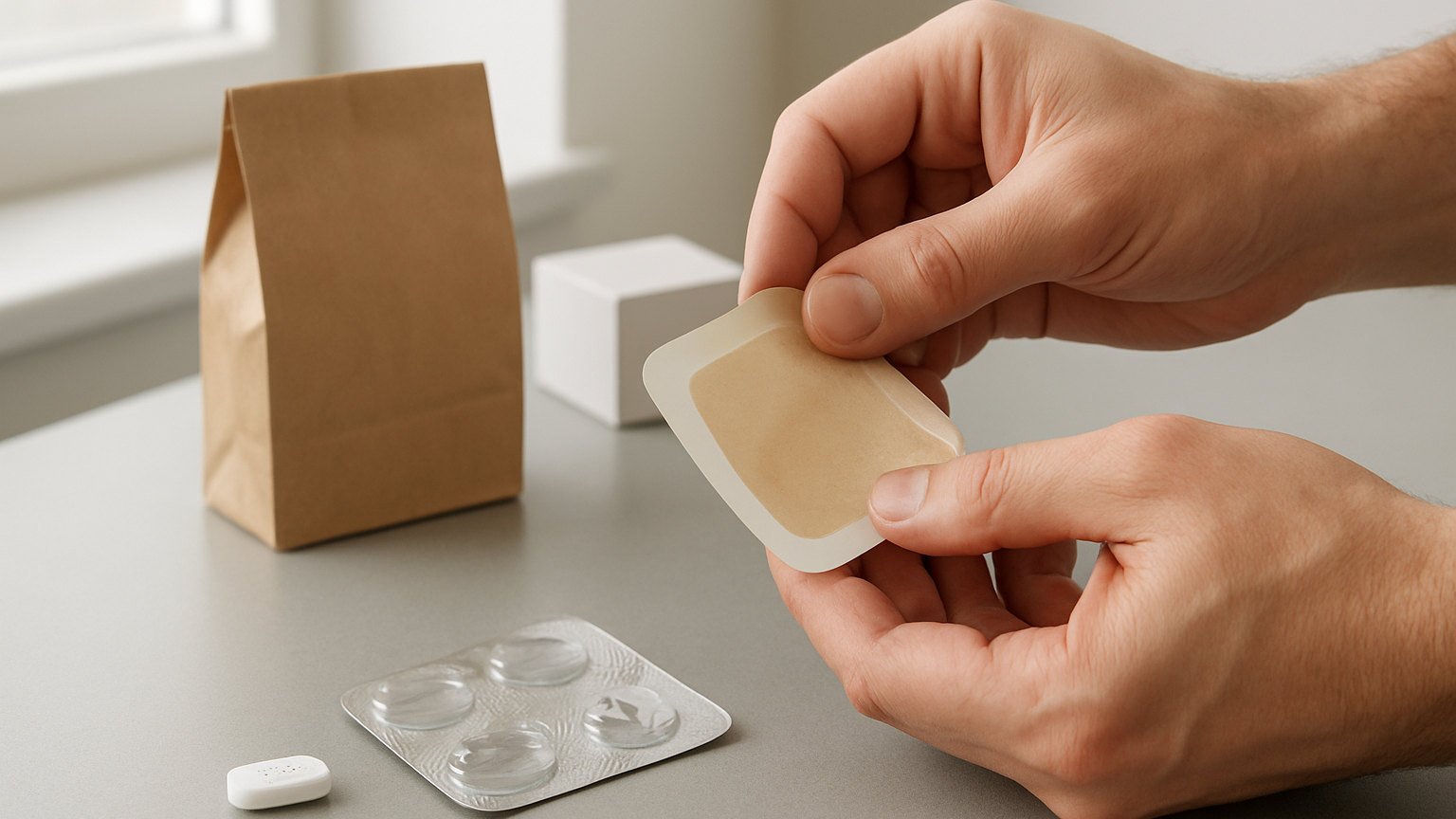
Used patches, folded sticky sides together - including nicotine patches, which are dangerous to a small child.
Vapes and e-liquids are electrical and chemical waste rather than medicines, and go to a recycling centre or a retailer take-back scheme. Nicotine e-liquid is genuinely toxic to children.
See needles and sharps disposal.
Do not pass it on
Offering leftover painkillers or antibiotics to a friend or relative is common, well-meant and unsafe - allergies, interactions, pregnancy and dose all differ.
Medicines cannot be donated to charity or sent abroad either, because storage conditions cannot be verified.
And do not sell them. Listing unwanted medicines online is unlawful and is exactly the market falsified product circulates in.
The label still matters
Anything with your name on it - a dispensing label, a delivery note from an online pharmacy, an order confirmation - carries your address and what you take.
Remove and destroy the label before the carton goes in the recycling.
See recycling medicine packaging.
Things people hold on to
Two categories accumulate more than any others.
Leftover antibiotics, kept in case something similar happens again. Taking a part-course later drives resistance and frequently treats the wrong organism - these should not exist, and if they do, they go back.
Leftover strong painkillers from an operation or an injury. Unused opioids in a household are a recognised risk to children, visitors and anyone struggling, and returning them is straightforward and unremarked. See finishing a course.
Do a sweep rather than a tidy
Bought medicines end up in more places than prescribed ones - a handbag, a coat pocket, the car, a desk drawer, a bedside table, a holiday bag.
Check all of them once a year, and check expiry dates while you are at it.
Keep what you genuinely use in one place, and take the rest in.
See clearing out your medicine cupboard and how long medicines really last.
The Usage section covers more on taking medicines day to day - Disposing of Medicines in a Care Setting is closely related to this one.